Ancient Corfu
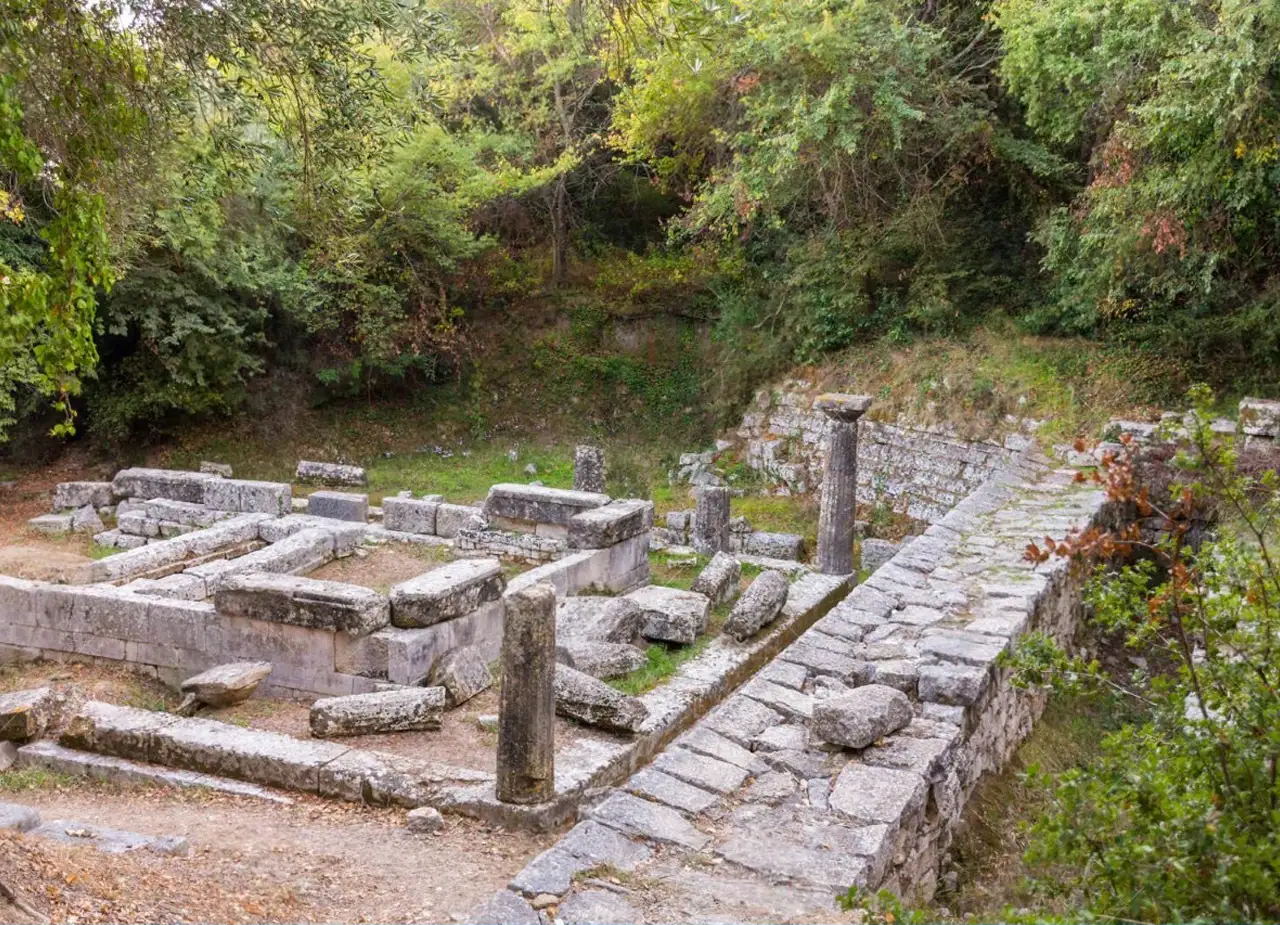
Corfu, or as it was called in antiquity “Korkyra”, was one of the most important city-states of the ancient Greek world. The island, strategically located in the northern Ionian Sea, served as a hub of navigation, trade, political influence, and cultural exchange. The history of ancient Corfu is rich, full of wars, colonies, myths, and contributions to Greek civilization.
According to Greek mythology, Corfu took its name from the nymph Korkyra (or Kerkyra), daughter of the river god Asopos. Poseidon, god of the sea, fell in love with Korkyra and abducted her, bringing her to the island. From their union was born Phaeax, ancestor of the Phaeacians, who were the mythical people of the island. The Phaeacians are presented in Homer’s Odyssey as a hospitable and civilized people who help Odysseus return to Ithaca. Nausicaa, daughter of King Alcinous, is perhaps the most characteristic figure of this tradition, embodying the nobility and kindness of the people.
The real history of ancient Corfu begins around 734 BC, when Corinth founded a colony on the island. The Corinthians settled in the area of Paleopolis (near present-day Mon Repos) and established a thriving city with strong naval and commercial power. Corfu’s geographical position made it an excellent station for voyages to the West, especially to the Greek colonies in southern Italy and Sicily. Korkyra quickly developed and acquired great power. It was one of the first cities to develop a strong fleet, even rivaling its mother city, Corinth. This rivalry culminated in the famous civil war between Korkyra and Corinth, which was one of the causes of the outbreak of the Peloponnesian War in the 5th century BC. Korkyra was one of the first Greek cities to acquire a powerful navy. Sources mention that during the 5th century BC, the island had one of the largest fleets in the Greek world. This navy allowed the Corfiots to maintain independence and control trade routes, primarily towards the Adriatic and the West.
Politically, the city went through various phases: from oligarchic regimes to democratic ones and vice versa, depending on alliances and internal conflicts. Internal political instability was not an uncommon phenomenon. Thucydides describes in detail the civil war in Corfu in 427 BC, one of the earliest examples of political terrorism and moral collapse during a civil conflict.
Ancient Corfu was culturally developed, with notable artistic production. The island was renowned for its temples and sanctuaries. The most important of all is considered the Temple of Artemis, which dates around 590 BC and is one of the earliest examples of archaic architecture in Greece. The famous sculpted pediment with the Gorgon (today exhibited at the Archaeological Museum of Corfu) is one of the most impressive and early examples of megalithic sculpture.
During the Peloponnesian War, Corfu allied with Athens, a fact that deepened the rift with Corinth and Sparta. Its naval power made it a significant strategic ally. Thucydides dedicates a substantial part of his work to describing the events in Corfu, such as the civil war of 427 BC, where democrats clashed with oligarchs, with atrocities and mass slaughters.
Roman Times
Corfu’s independence gradually ended during the period of Roman expansion. In 229 BC, Corfu came under Roman protection and was eventually incorporated into the Roman state. Despite political subjugation, the island continued to be an important naval and commercial station during the Roman period. The political significance of the city diminished, but its strategic location ensured the continuous presence and use of its port. During the Roman period, Corfu also served as a place of rest and vacation for many Roman officials and nobles.
Ancient Corfu was not merely a provincial colony. It was an independent naval power with a rich culture and historical significance. Its mythological identity, artistic creations, political conflicts, and geopolitical importance make it one of the most interesting city-states of antiquity. Today, through archaeological findings, museums, and historical memory, Ancient Corfu continues to inspire and recall its former glory. It is a living part of Greek cultural heritage that deserves study, exploration, and admiration.