
Kassiopi Corfu
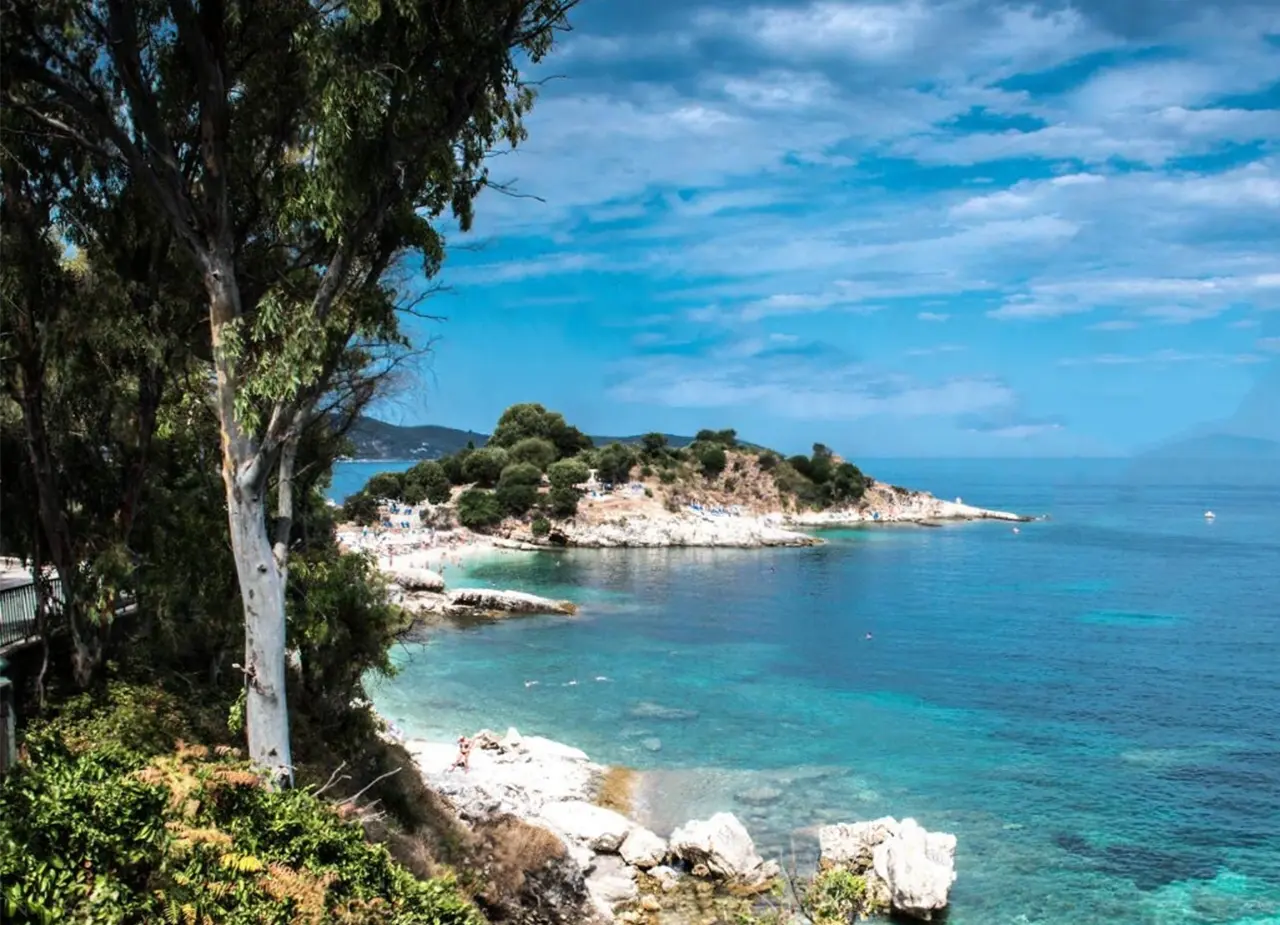
Kassiopi and the northeastern part of Corfu form a destination full of history, natural beauty, and cultural heritage. This place is connected to historical events from the Byzantine, Venetian, and modern eras, and the Kassiopi Castle, along with the paradisiacal area of Erimitis, are two of the most emblematic sites of the region. This area is full of contradictions, from the charm of the village and the imposing nature of the castle to the secluded beaches and unique natural landscapes.
Kassiopi has a long and interesting history that dates back to antiquity. The area was known as Kassiopi, and according to sources, Kassiopi was one of the most important ancient cities of Corfu. According to Greek mythology, Kassiopi was the daughter of Cepheus and Andromeda. Its location in northern Corfu, in a strategic position overlooking Epirus and the Ionian Sea, made it important for maritime and commercial activity. Later, Kassiopi came under Byzantine rule and became a significant defensive point. The Kassiopi Castle was built in the 12th century and was one of the most powerful defensive structures on Corfu. Its location on a hill with a sea view made the fortress difficult to access and strategically crucial for protection against attacks. The castle remained in good condition for many generations and was used as a defensive stronghold even during the Venetian occupation. The Venetian period (1386–1797) was crucial for the history of Corfu and Kassiopi. The Venetians captured Corfu in 1386 and made it part of the Venetian Republic for almost four centuries. During this time, Kassiopi became part of the Venetian strategic plans for controlling the Ionian and protecting against attacks from both the Ottomans and other Mediterranean forces. The decline of the Kassiopi Castle began and continued during the French and later the British rule, but the castle, although in ruins, continued to maintain its significance as a defensive position until the end of the 19th century.
Beyond its immense history, Kassiopi and the surrounding area possess unique natural beauty. Erimitis, an area covering approximately 2,000 acres, is one of the most pristine and unexplored spots in northeastern Corfu. It is a natural paradise filled with olive groves, pine trees, and various other types of trees, while the area’s beaches, such as Akoli and Avlaki, are enchanting and secluded, giving the sense of a tropical Caribbean island. The landscape is particularly impressive and maintains its natural integrity, as the area remains almost untouched by modern tourist infrastructures.
A Nature's Marvel
In 2013, the Erimitis area was highlighted as a point of interest due to plans for tourism development. NCH Capital, through the Hellenic Republic Asset Development Fund (HRADF), bought the area with the aim of investing in its tourist development. However, the planned development faced strong opposition from local authorities and residents, who feared that it would alter the natural landscape and cultural heritage of the area. The privatization of Erimitis was completed in 2024 when Calamos Investments purchased the area, providing the opportunity for new development in the region. However, the future of the area remains uncertain, as debates about tourism development and environmental protection continue.
Kassiopi and Erimitis are two of the most important and impressive places on Corfu. With a rich history that spans from antiquity to the Venetian period and modern times, these areas carry the legacy of the civilizations that passed through them. The Kassiopi Castle, though in ruins, continues to remind us of the history of defensive efforts and the strategic importance of this area for the forces that once controlled it. On the other hand, Erimitis remains one of the last pristine areas of Corfu, with its natural beauty and unique identity. This area is not only a tourist destination but also a point of connection between the past and the present, a culture that survived and evolved while preserving its natural heritage.

