The Historical Village of Nymfes
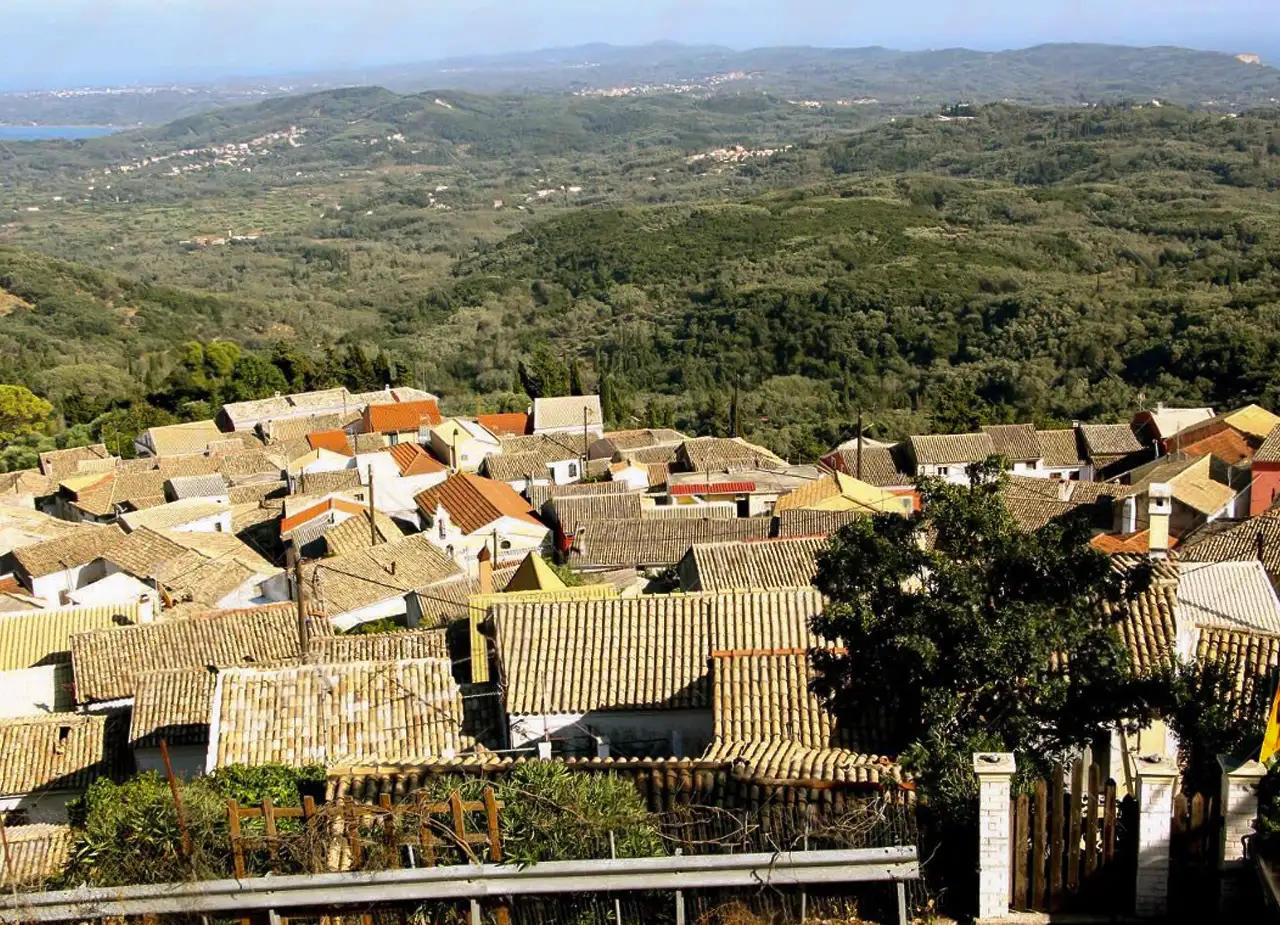
Nymfes (or Nymphes) is a beautiful traditional village located at the top of northern Corfu, built at an altitude of about 200 meters, surrounded by lush vegetation, with abundant running waters and waterfalls. Its name derives from the ancient Greek nymphs, nature fairies who, according to mythology, used to bathe in the waters of the local waterfalls. The first written reference to the village under the name “Nymphes” dates back to 1347, although its habitation extends much earlier, likely since ancient times.
During the Middle Ages, Nymfes was one of the 23 major villages in the eastern area of Mount Pantokrator, contributing to the construction of the namesake temple at the top of the mountain, as referenced in an official institutional document. The strategic position of the village led the Venetians to establish a lookout post there, aiming to monitor and protect the wider region. Today, the village retains its traditional identity to an impressive degree: narrow alleys (kantounia), stone houses, and manors.
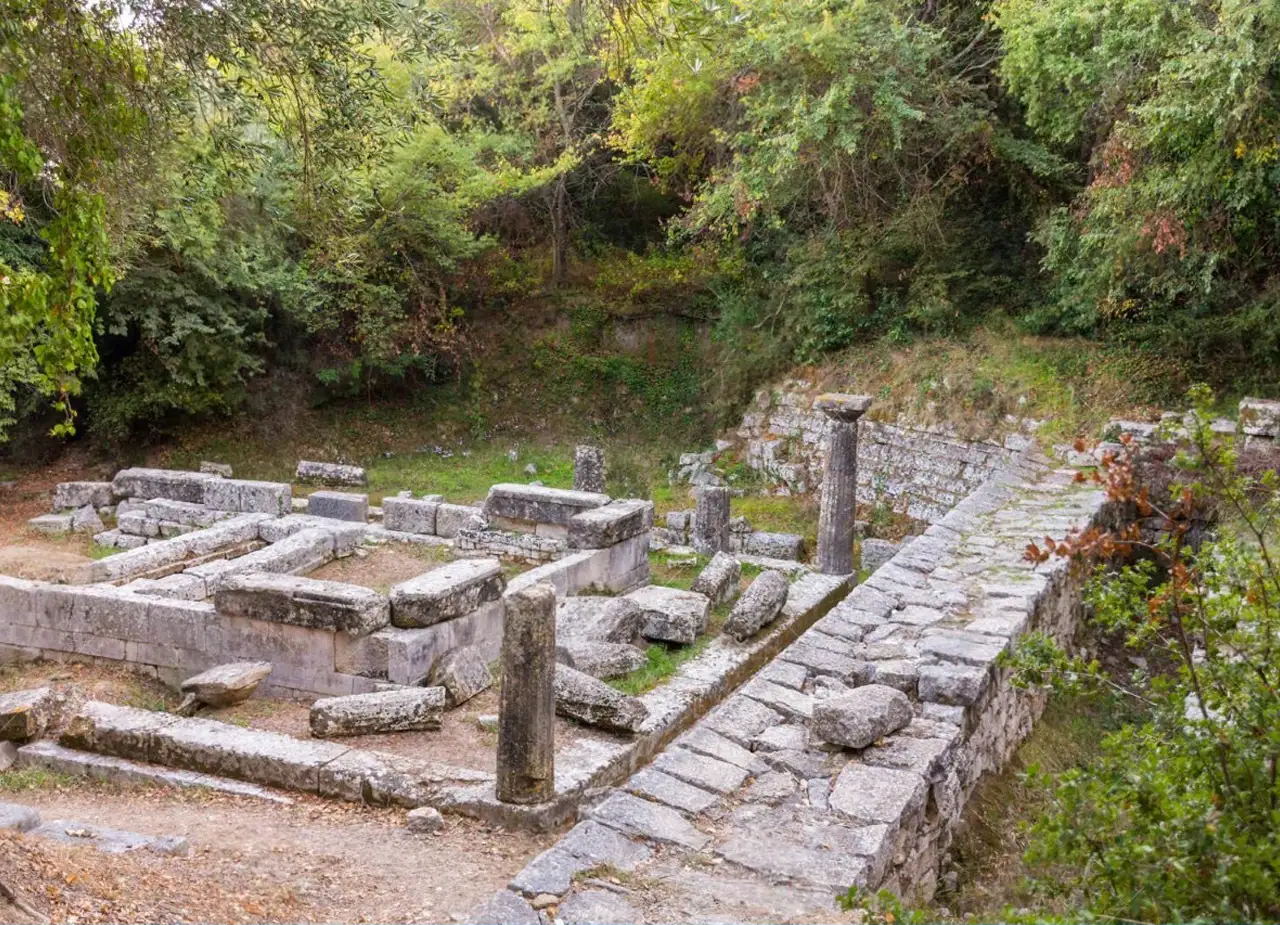
Just outside the village, within a dense forest, lies the historic Askitario, one of the oldest Christian monuments in Corfu, with roots attributed to the 5th–6th century AD. According to folk tradition, a hermit from Epirus, Artemios Paisios, lived there in a carved-out cave on a rock; today, a marble plaque commemorates the event. A second version of the story claims that the seclusion was for protection from pirates during times of invasion.
The complex includes cells, the main church of the monastery dedicated to Pantokrator the Savior Christ, storage areas, and in the basements, a bathhouse and an olive press, which served the entire community. In the pre-war years, the Agricultural School of Corfu operated there (1932–1936), enhancing the site’s academic and agricultural value. The first official reference to the Askitario dates from 1371, in a document from the Latin Angevin administration, which records a privileged exemption of the monastery from state authorities due to its miraculous nature. The facilities feature ruins of monastic cells carved into rock, a wooden building, and a huge stone cistern used for olive oil production. Today, conservation and restoration studies of the monuments are underway.
Nymfes Waterfalls
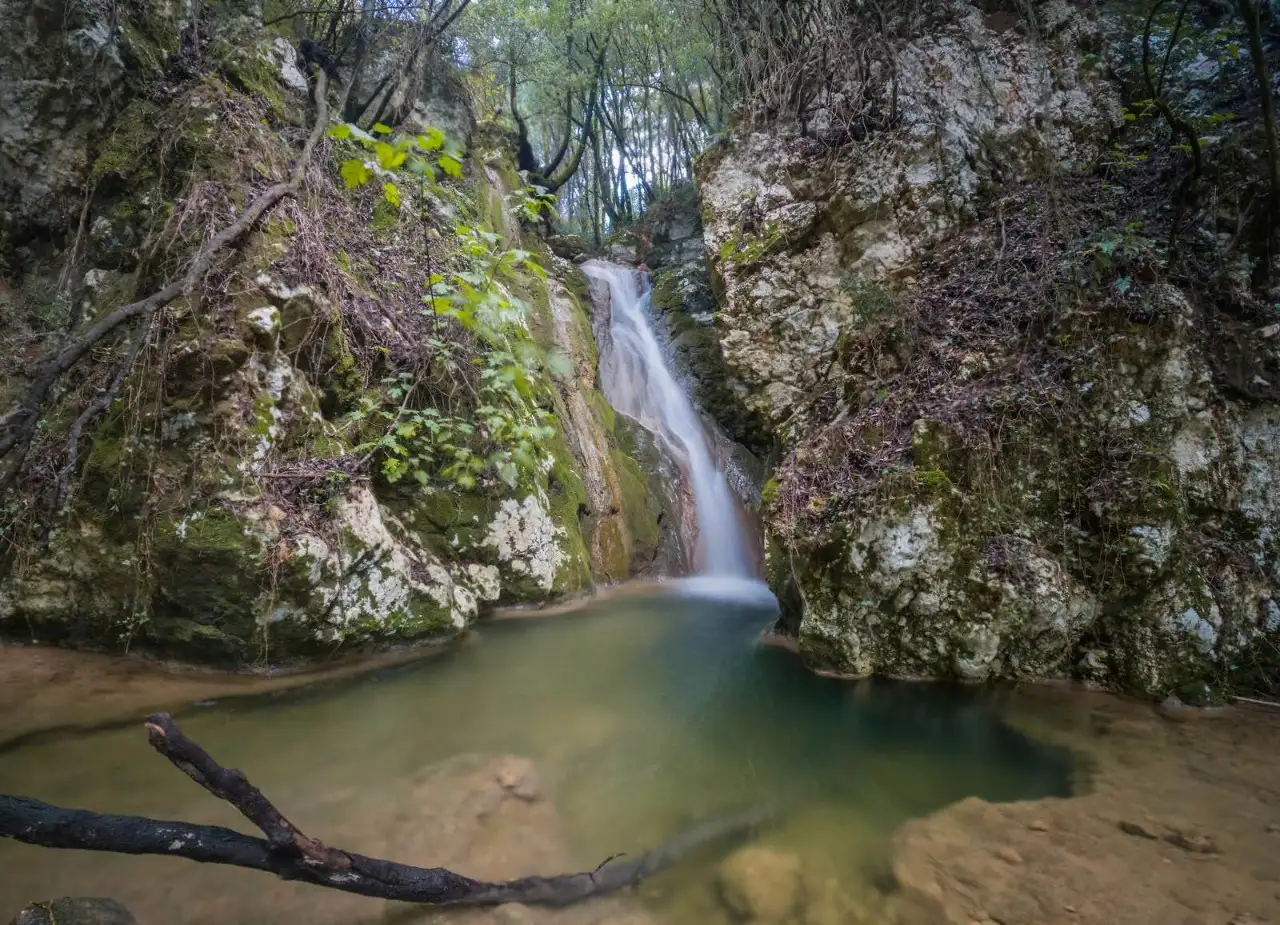
The area is home to the Nymfes Waterfalls, the largest in size in Corfu. The water falls from a height of about 10–15 meters into a dense, green ravine, creating a stunning scene, ideal for photography or simply for enjoying peace in nature. The waterfalls, mostly full after rainy seasons, are notable for their continuous flow even during summer, in a cool, lush ravine. According to mythology, the nymphs used to bathe there, hidden from mortal eyes. To reach them, one follows a rural path of about 1–1.5 kilometers outside the village, passing the football field and continuing along a dirt road until finding the wooden signs that lead to the wooden stairs to the waterfalls. The route is easy, allowing the visitor to enjoy nature and a sense of detachment from everyday life.
Nymfes is a modern example of a village that has preserved its authenticity, combining traditional life with respect for nature and culture. The presence of a kumquat production factory, a traditional product of Corfu, allows visitors to learn about the process of making the sweet and liqueur, as well as to taste local delicacies. The combination of elements, history, religious tradition, natural beauty, folk customs, and local flavors, forms a multifaceted and profound experience that goes beyond typical tourist visits.
Nymfes is a place where past and present coexist in harmony. Its history, from the medieval era to the present day, is bridged with mythology, nature, and human faith. The Askitario testifies to Christian seclusion and the spiritual search of the early centuries AD, while the waterfalls and local customs (annual festivals, kumquat) evoke feelings of serenity and awe.