Agios Matthaios
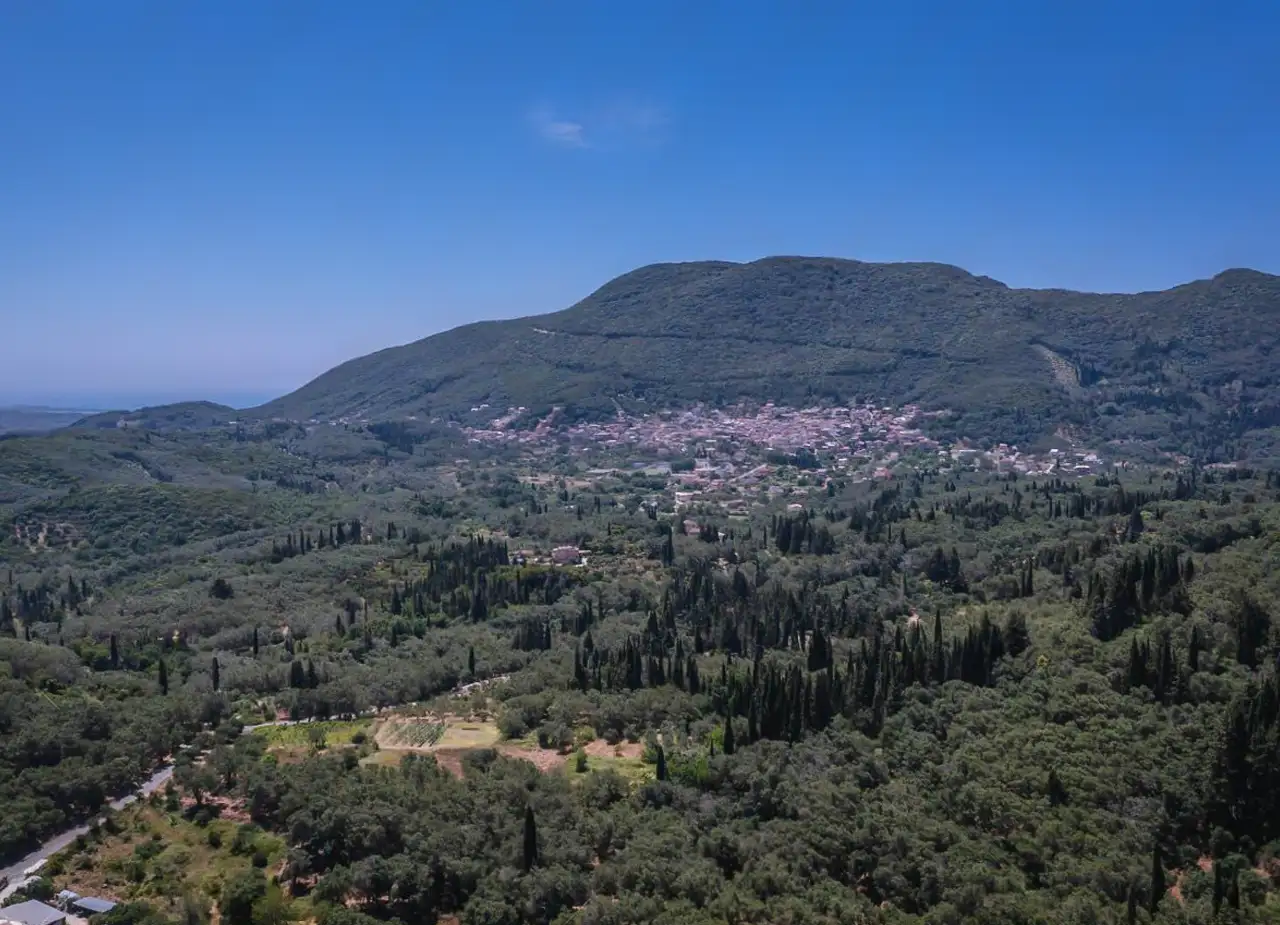
Agios Matthaios is one of the largest villages in southern Corfu. It lies about 25 kilometers from the island’s main town and is characterized by its distinctive narrow alleys and impressive old mansions. The village’s atmosphere combines traditional charm with historical grandeur, offering visitors a unique glimpse into the rich heritage of Corfu.
Interestingly, the history of Agios Matthaios does not begin at its current location but somewhat further south. Before the 16th century, there was a small village called Zygonos located south of today’s Agios Matthaios. This original settlement was destroyed during a raid by the famous pirate Barbarossa. According to local lore, the few survivors of this destruction founded the present village around the mid-1500s, precisely where the church bearing the village’s name and the central village square stand today. From these humble beginnings, the settlement gradually grew. By the mid-20th century, its population had reached around 2,000, with the majority of its inhabitants engaged in agriculture and fishing.
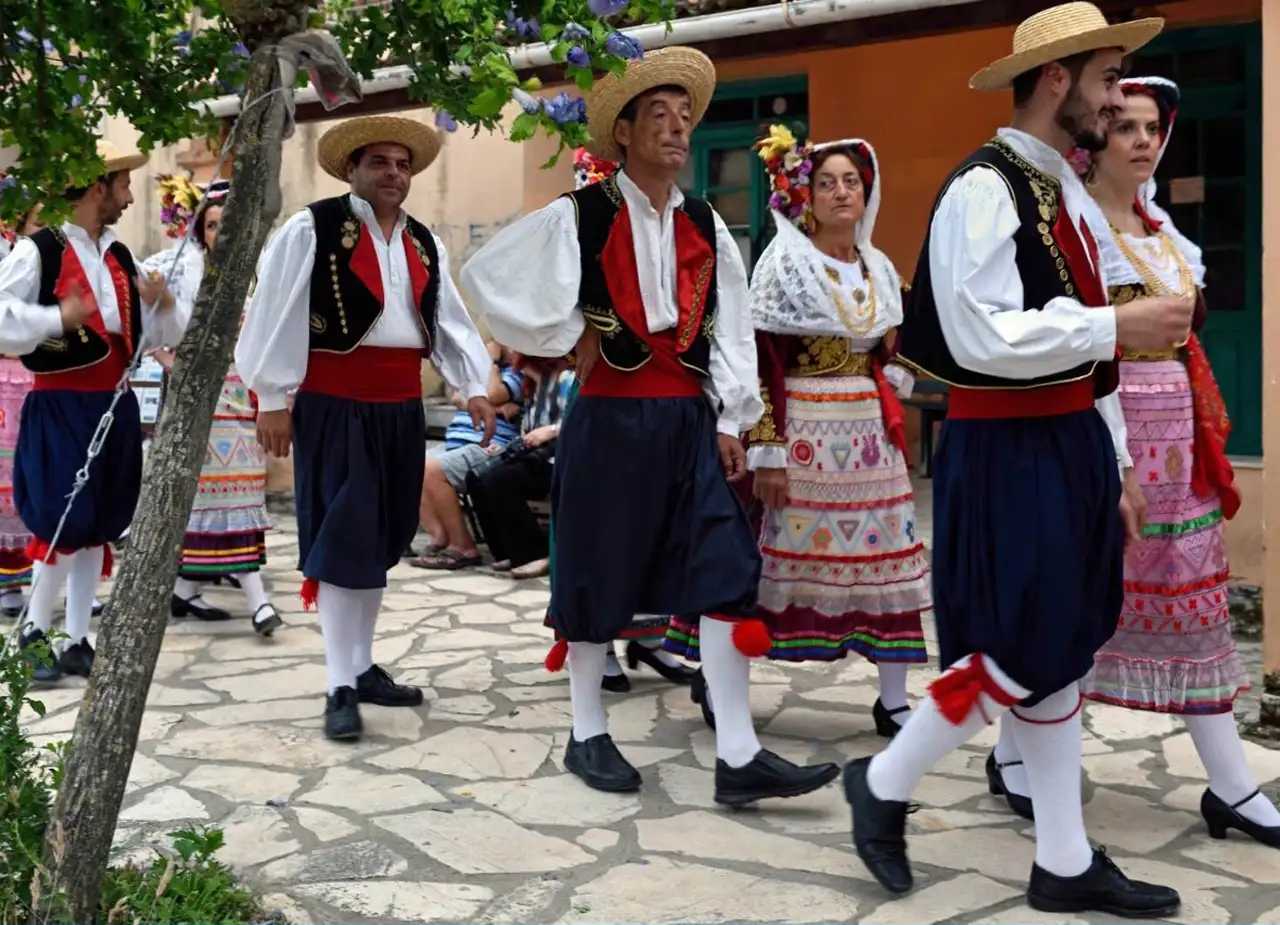
Today, Agios Matthaios maintains its traditions and history while also providing modern services to satisfy the needs of visitors. The village’s main street is bustling with restaurants, cafes, and bars offering unique local flavors, entertainment, and nightlife that lasts into the early hours of the morning. The maze-like cluster of old houses, whose architecture was heavily influenced by Venetian styles, creates a captivating scene that transports every visitor back in time. The residents have established various cultural associations dedicated to preserving and enriching the village’s traditions and culture. The local philharmonic orchestra and numerous choirs play a significant role in the community’s daily life, contributing to a vibrant cultural atmosphere.
Agios Matthaios is nestled at the foot of Mountain “Gamilion”. According to mythology, this mountain was the place where Jason and Medea were married, adding a layer of mythic allure to the area. The western side of the mountain, where it meets the sea, boasts one of Corfu’s largest olive groves, containing trees that are more than 1,500 years old. At the summit of the mountain, a monastery dedicated to the Pantokrator (Almighty God) has stood since the 15th century. Though this monastery no longer functions as a religious institution, it is still celebrated every August 6th with a grand festival that visitors should not miss.
The mysteries of Mount Gamilion are many, to the extent that most Corfiots themselves are unaware of them. Just a few meters from the monastery lies a cave that descends deep into the mountain’s interior, with no visible end. Locals call it the “Trypa tou Pelaou” (Hole of the Sea), as it is believed to have once connected to the sea. Another cave can be found on the southwestern side near the castle of Gardiki. Known as “Grava” by locals, this small enchanting cave has revealed signs of human activity dating back to the Paleolithic era. Bones and tools discovered there prove that the wider region around Agios Matthaios has been inhabited for tens of thousands of years. The nearby Gardiki castle was likely built in the late 12th century when Corfu was under the protection of the Despotate of Epirus. This castle was of great importance because a settlement with significant commercial value developed around it. Along with its twin Angelokastro and the castle of Kassiopi, these fortresses served as the island’s strongholds, protecting inhabitants from raids and periods of turmoil.
Nature and activities
In Agios Matthaios, visitors can participate in a wide range of activities offered by the local community. One of the highlights is learning about the olive tree and olive oil, products that have been cultivated by Corfu’s land for centuries. Visitors have the opportunity to understand the characteristics of the local olive oil, learn about the methods of harvesting and production, and of course, taste the product. Moreover, in the nearby area of Chalikounas, horse riding enthusiasts can enjoy unique rides through idyllic landscapes by the sea and amid the lush greenery of Corfu’s natural environment.
The broader area around Agios Matthaios features stunning beaches where the mountains meet the sea. Prasoudi, Kanouli, and Skidi beaches offer relaxation and relief from the summer heat and are ideal for families with children. Meanwhile, Paramona beach caters more to younger visitors, offering many activities as well as traditional restaurants and cafes.
Agios Matthaios is an ideal destination for those who love Corfu’s history as well as for visitors wishing to experience the island’s tradition and culture firsthand. The locals, with their unique character and temperament, warmly invite you to explore this magical place, which combines extraordinary natural beauty with mythical history. Here, every corner tells a story, every olive tree whispers ancient secrets, and every path leads to unforgettable memories.